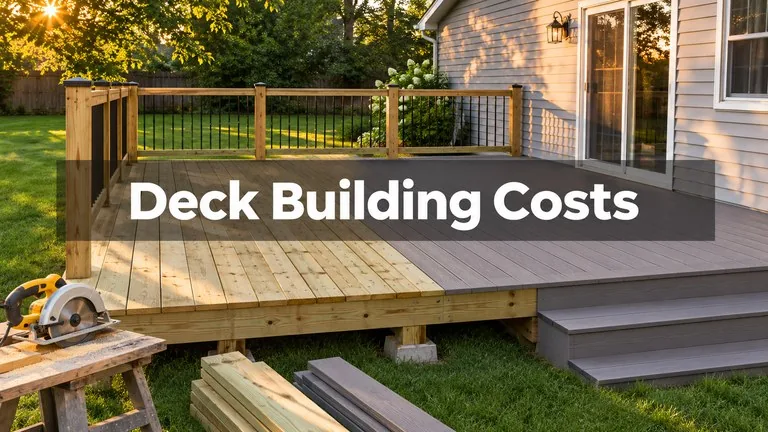
A new deck built by a contractor typically costs about $30 to $60 per square foot for pressure-treated wood and roughly $50 to $80 per square foot for composite in 2026, all in. For a common 16-by-20-foot deck (320 square feet), that puts a wood deck around $10,000 to $19,000 and a composite deck around $16,000 to $25,000. Cedar usually falls between the two. Height, stairs, railings and soil conditions move the final number more than the decking boards do.
The board material is only one part of the bill. Framing, footings, railings and labor make up most of the cost, and those parts are similar no matter which decking you put on top. This guide prices each material, explains the permit and footing rules that surprise first-time builders, compares DIY with hiring out, and shows what each choice costs over 20 years of ownership.
Deck cost by material: pressure-treated, cedar and composite
Here’s how the common decking materials compare. Material prices are per square foot of deck surface, for the boards only. Framing is almost always pressure-treated lumber regardless of what goes on top.
| Decking | Board material cost per sq ft | Typical lifespan | Upkeep |
|---|---|---|---|
| Pressure-treated pine | $3 to $6 | About 10 to 20 years, depending on care and climate | Wash and reseal or restain every 2 to 3 years; boards can check, split and warp |
| Cedar | $8 to $15 | About 15 to 20 years | Same staining schedule; softer wood dents more easily |
| Redwood | $9 to $15 | About 15 to 20 years or more | Regular sealing; availability and price vary outside the West |
| Composite | $5 to $20 depending on line | 25 years or more; many brands warranty 25 to 50 years | Wash once or twice a year; no staining or sealing |
| PVC (cellular vinyl) | $5 to $13 and up for premium lines | 25 years or more | Wash as needed; lightest and most moisture-proof, can get hot in sun |
Whole-project figures line up with those gaps. Zonda’s 2025 Cost vs. Value report priced a 16-by-20-foot wood deck addition at $18,263 and the same deck in composite at $25,096, using full contractor rates. That’s about $57 and $78 per square foot. Homeowner-reported averages run lower, with Angi citing $30 to $60 per square foot for professionally built decks and labor at roughly $15 to $35 per square foot.
Railings, stairs and other add-ons
Railings are the line item people forget to budget. Any deck surface more than 30 inches above the ground needs a guard under the model residential code most US cities adopt, usually at least 36 inches tall with openings small enough that a 4-inch sphere can’t pass through. Railing materials per linear foot, before labor, run about:
- Wood: $15 to $50
- Composite: $15 to $60
- Vinyl or PVC: $20 to $60
- Aluminum: $50 to $200
- Cable: $60 to $500
- Glass: $100 to $600
Installation labor adds about $10 to $50 per linear foot. A 16-by-20 deck attached to the house on one long side needs about 52 feet of railing, so that line alone can be $1,300 for basic wood or $10,000 or more for cable or glass.
Other common extras:
- Stairs: about $1,000 to $2,000 for a typical set, more for wide or multi-landing stairs on a second-story deck
- Removing an old deck: about $500 to $1,000 plus disposal
- Permit: often $225 to $500 for a new deck, though some cities charge by project value
- Lighting, built-in benches, privacy screens and under-deck drainage systems, each priced separately
Permits, footings and the parts inspectors check
Most attached decks need a building permit. The International Residential Code, which most US jurisdictions use as their base, exempts only small freestanding decks: under 200 square feet, no more than 30 inches above grade, not attached to the house, and not serving the required exit door. Your city can be stricter, so call the building department before buying lumber.
Inspectors focus on three things:
- Footings. Concrete footings must sit below your local frost line so the deck doesn’t heave in winter. In northern states that can mean digging 42 to 48 inches or deeper, which costs more in labor and concrete.
- The ledger. An attached deck hangs from a ledger board bolted to the house’s rim joist with proper flashing above it. A poorly flashed ledger lets water rot the house framing, and ledger failure is one of the most common causes of deck collapses.
- Hardware. Joist hangers, post bases and fasteners must be rated for contact with pressure-treated lumber, which corrodes standard steel.
Expect at least a footing inspection before concrete is poured and a final inspection. Some cities add a framing inspection before decking goes on.
DIY versus hiring a deck contractor
Labor is roughly half the cost of a contractor-built deck, so building it yourself can save thousands. It also takes much longer than most people plan for. A two-person contractor crew might build a simple 320-square-foot deck in a week or less. An experienced DIYer working weekends often needs four to eight weekends.
DIY is reasonable when the deck is low to the ground, rectangular, and either freestanding or attached to a straightforward rim joist. Hire out when the deck is more than one story up, needs a beam span calculation, sits on a slope, attaches to brick or stucco, or includes long stair runs. Many homeowners split the job: a contractor sets footings, ledger and framing, and they install the decking and railings themselves.
Example: Tom plans a 12-by-16-foot (192 square foot) ground-level pressure-treated deck. Lumber, concrete, hangers and fasteners cost about $3,200, a rented auger $150, and the permit $250, so his DIY total is about $3,600. A contractor quoted $8,600 at about $45 per square foot. He saves about $5,000 and spends five weekends building it.
Lifetime cost: why cheaper wood isn’t always cheaper
Composite costs more up front, but wood needs regular cleaning and staining. Better Homes and Gardens recommends washing and restaining every two to three years. Run the numbers over the years you plan to own the house.
Example: For a 320-square-foot deck, Aisha gets quotes of $15,000 for pressure-treated and $21,500 for composite. Hiring a pro to clean and stain the wood deck costs her about $1,000 each time, every three years, so roughly $6,000 over 20 years, plus about $1,000 of board replacements. The wood deck’s 20-year cost lands near $22,000 against about $22,000 for composite including a few hundred dollars of cleaning supplies. If she stains it herself for about $250 a time, wood stays thousands cheaper. If she’d pay someone, the two come out even, and the composite deck still looks newer.
How to plan and price your deck
- Decide size and height from how you’ll use it. A dining table for six needs at least a 12-by-12 area; add a grill and walkway and 14 by 16 is more comfortable.
- Check zoning setbacks, HOA rules and the permit requirements with your building department.
- Call 811 at least a few days before digging so utility lines are marked.
- Choose decking and railing material, then get three bids that list footing depth, joist size and spacing, hardware brand, ledger flashing method and railing type.
- Confirm who pulls the permit and who schedules inspections.
- Build or approve footings and framing first, inspect, then install decking, stairs and railings.
- Seal wood decks once the boards are dry enough to accept stain, often after a few weeks to a few months for fresh pressure-treated lumber.
What a deck returns at resale
Decks are among the better-returning outdoor projects. In the 2025 Cost vs. Value report, a wood deck addition recouped 94.9% of its cost nationally and a composite deck recouped 88.5%. The National Association of Realtors’ 2023 Remodeling Impact Report found owners recovering about 89% of the cost of a new wood deck. A deck you’ll use for years plus a high share back at sale makes this one of the easier remodeling decisions to justify.
Common questions
How much does a 12×12 deck cost?
A 144-square-foot deck typically costs about $4,300 to $8,600 built by a contractor in pressure-treated wood, using $30 to $60 per square foot. Composite runs higher, and a DIY build in pressure-treated wood often costs about $2,000 to $3,000 in materials.
Is composite decking worth the extra cost?
It’s worth it if you plan to stay more than about ten years and would otherwise pay someone to stain a wood deck every few years. If you’ll do wood upkeep yourself or sell soon, pressure-treated usually costs less overall.
Do I need a permit to build a deck?
Usually yes for attached decks or any deck more than 30 inches off the ground. Model code exempts only small, low, freestanding decks under 200 square feet, and local rules can be stricter.
How long does a deck last?
Pressure-treated decks commonly last about 10 to 20 years and cedar about 15 to 20, depending on climate and maintenance. Composite and PVC decking often last 25 years or more. The pressure-treated framing under any deck needs protection from standing water to last as long as the boards.
Is it cheaper to build a deck or a patio?
A simple ground-level paver or concrete patio is usually cheaper per square foot than a raised deck, because it needs no framing or railings. On sloped yards, a deck is often the more practical and affordable choice.
Before you build
- Confirm permit rules, setbacks and frost depth with your building department.
- Call 811 before any digging.
- Price railings and stairs separately; together they can add several thousand dollars.
- Ask every contractor how the ledger will be attached and flashed.
- Compare 20-year cost, not only the first quote.
- Plan building season. Late fall and winter bids are often lower in cold climates, but footings can’t be poured in frozen ground.
Editorial note: This article is general information. Prices and code details were checked as of November 2026 and vary by region, so confirm costs with licensed local contractors and code requirements with your city or county building department.