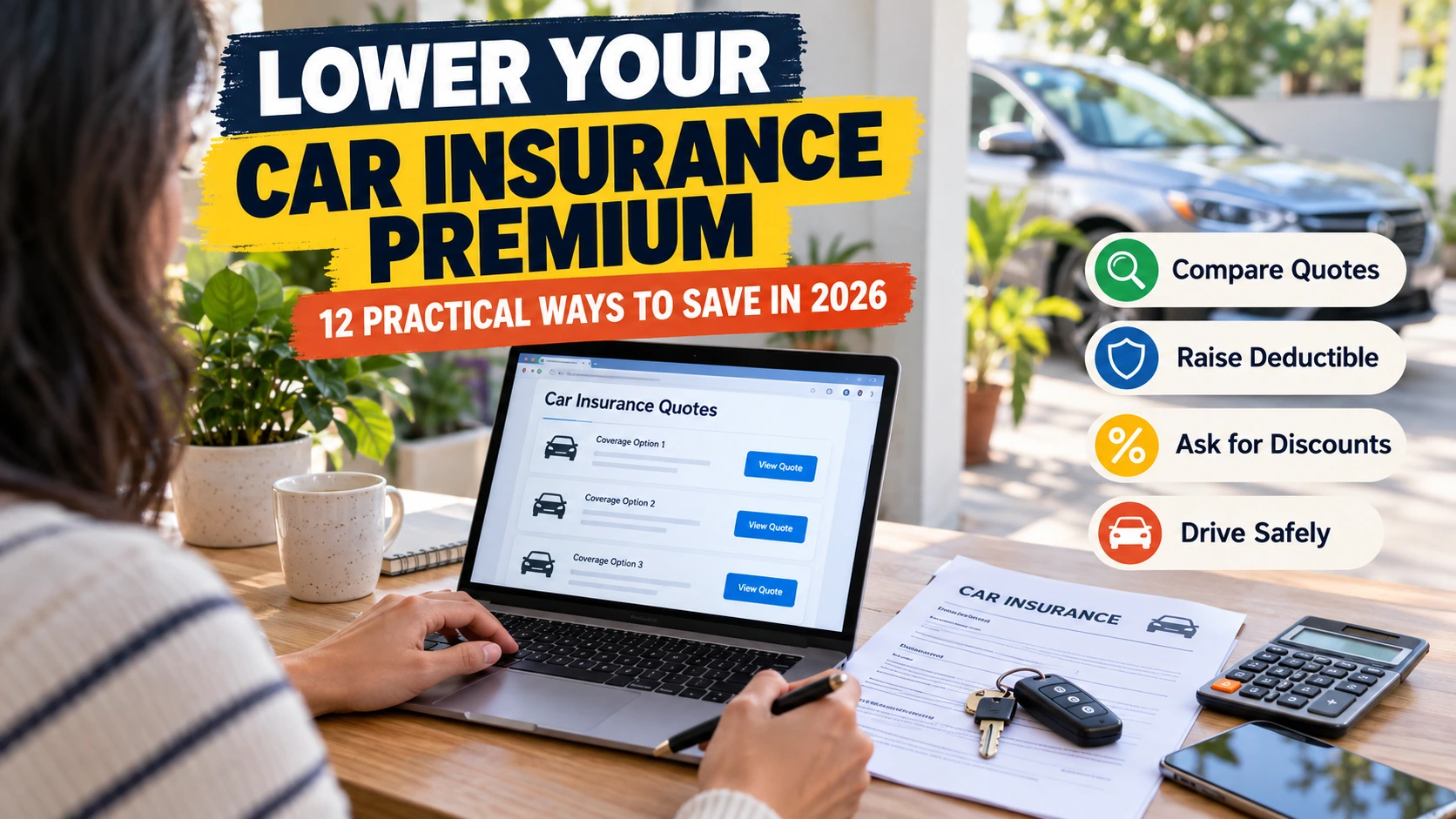
Car insurance is a cost most drivers cannot avoid, but the price you pay is not fixed. Two drivers with similar cars and records can pay very different premiums depending on the insurer they choose, the coverage they buy and the discounts they claim. Shopping around and adjusting a few settings on your policy is often the fastest way to save.
This guide covers practical ways to lower your premium, how to decide which changes make sense for you and what to watch out for so you do not end up underinsured. It is general information, not insurance advice. Coverage requirements and rules vary by state, so check your state’s minimums and your policy documents before making changes.
Why your premium is what it is
Insurers set prices using many factors, including your driving record, claims history, where you live and park the car, how much you drive, the make and model of the car, your age and driving experience, the coverage limits and deductibles you choose and, in most states, a credit-based insurance score. Each company weighs these differently, which is why quotes for the same driver can vary so much.
Some factors you cannot change quickly, such as your age or a recent accident. Others, such as your deductible, coverage choices, discounts and which insurer you use, you can change today.
Twelve ways to lower your premium
| Strategy | How it saves money | What to watch |
|---|---|---|
| Compare quotes every year | Rates for the same driver can differ widely between insurers | Compare identical coverage limits and deductibles |
| Raise your deductible | Higher deductibles usually mean lower premiums | Keep enough savings to pay the deductible after a claim |
| Bundle home or renters insurance | Many insurers discount multi-policy customers | Check the bundle is actually cheaper than separate policies |
| Ask about every discount | Safe driver, good student, multi-car, paperless and autopay discounts add up | Discounts vary by insurer and state |
| Try usage-based insurance | Telematics programs can reward safe, low-mileage driving | Hard braking or late-night driving can reduce savings |
| Review coverage on older cars | Dropping collision or comprehensive on a low-value car can cut costs | You would pay for your own repairs after an accident |
| Report lower mileage | Driving less can lower your rate | Report mileage honestly |
| Take a defensive driving course | Some states and insurers give discounts for approved courses | Check eligibility before enrolling |
| Improve your credit | In most states, better credit-based scores can mean lower rates | Some states limit or ban the use of credit |
| Choose your next car carefully | Cars with lower repair costs and good safety ratings cost less to insure | Get quotes before you buy |
| Pay in full | Some insurers charge less for annual or six-month payments | Only if it fits your budget |
| Keep a clean record | Avoiding tickets and at-fault claims protects your rate | Violations can affect rates for several years |
Example: A driver with a ten-year-old car worth about $3,000 still pays for collision coverage with a $500 deductible. After an accident, the most the insurer would pay is the car’s value minus the deductible. If the yearly cost of collision coverage is a meaningful share of that amount, dropping it and saving the difference may make sense, as long as the driver could afford to repair or replace the car on their own.
Do not cut the wrong coverage
Saving money should not leave you exposed to large bills. Liability coverage pays for injuries and damage you cause to others, and state minimums are often low compared with the cost of a serious accident. Many drivers choose liability limits well above the minimum, especially if they own a home or have savings to protect. Uninsured and underinsured motorist coverage protects you if the other driver has little or no insurance.
If you have a car loan or lease, the lender usually requires collision and comprehensive coverage, so you cannot drop them until the loan is paid off. Gap insurance may also be worth considering on a new financed car.
Step-by-step: shopping for a better rate
- Gather your details. Have your current declarations page, driver’s license numbers, vehicle identification numbers and annual mileage ready.
- Decide on your coverage. Choose the liability limits, deductibles and optional coverages you want before comparing.
- Get several quotes. Compare at least three insurers, including both large national companies and regional insurers.
- Ask about discounts. Mention safe driving, bundling, good grades, multiple cars, paperless billing and any professional or alumni groups.
- Check the insurer’s reputation. Look at complaint data from your state insurance department and claims service ratings.
- Switch carefully. Start the new policy before canceling the old one so you never have a gap in coverage.
When to shop around
Good times to compare quotes include your policy renewal, after a rate increase, when you move, buy a new car, add or remove a driver, get married or when an old ticket or accident drops off your record. Even if you stay with your current insurer, a competing quote can help you ask for a better rate.
Be careful with ads and calls promising extremely cheap insurance. Make sure any company you buy from is licensed in your state, which you can check through your state insurance department’s website.
Common questions
How often should I compare car insurance quotes
At least once a year, usually before renewal, and whenever your situation changes, such as moving, buying a car or adding a driver.
Does raising my deductible really lower my premium
Usually, yes. A higher deductible means you pay more of a claim yourself, so insurers charge less. Choose a deductible you could comfortably pay.
Will getting quotes hurt my credit
Insurance quotes generally use a soft inquiry that does not affect your credit score.
Should I drop full coverage on an old car
It can make sense when the car’s value is low compared with the cost of collision and comprehensive coverage, and you could afford to repair or replace it yourself. It is not an option if you still have a loan or lease.
Before you change your policy
Compare quotes for the same coverage, claim every discount you qualify for and adjust deductibles and optional coverage thoughtfully. Keep strong liability limits, check the insurer’s license and complaint record, and never cancel your old policy until the new one is active.
Editorial note: This article is general information and not insurance advice. It is not affiliated with any insurer. Coverage requirements, discounts and the use of credit in pricing vary by state and company. Review your policy and your state insurance department’s guidance before making changes.