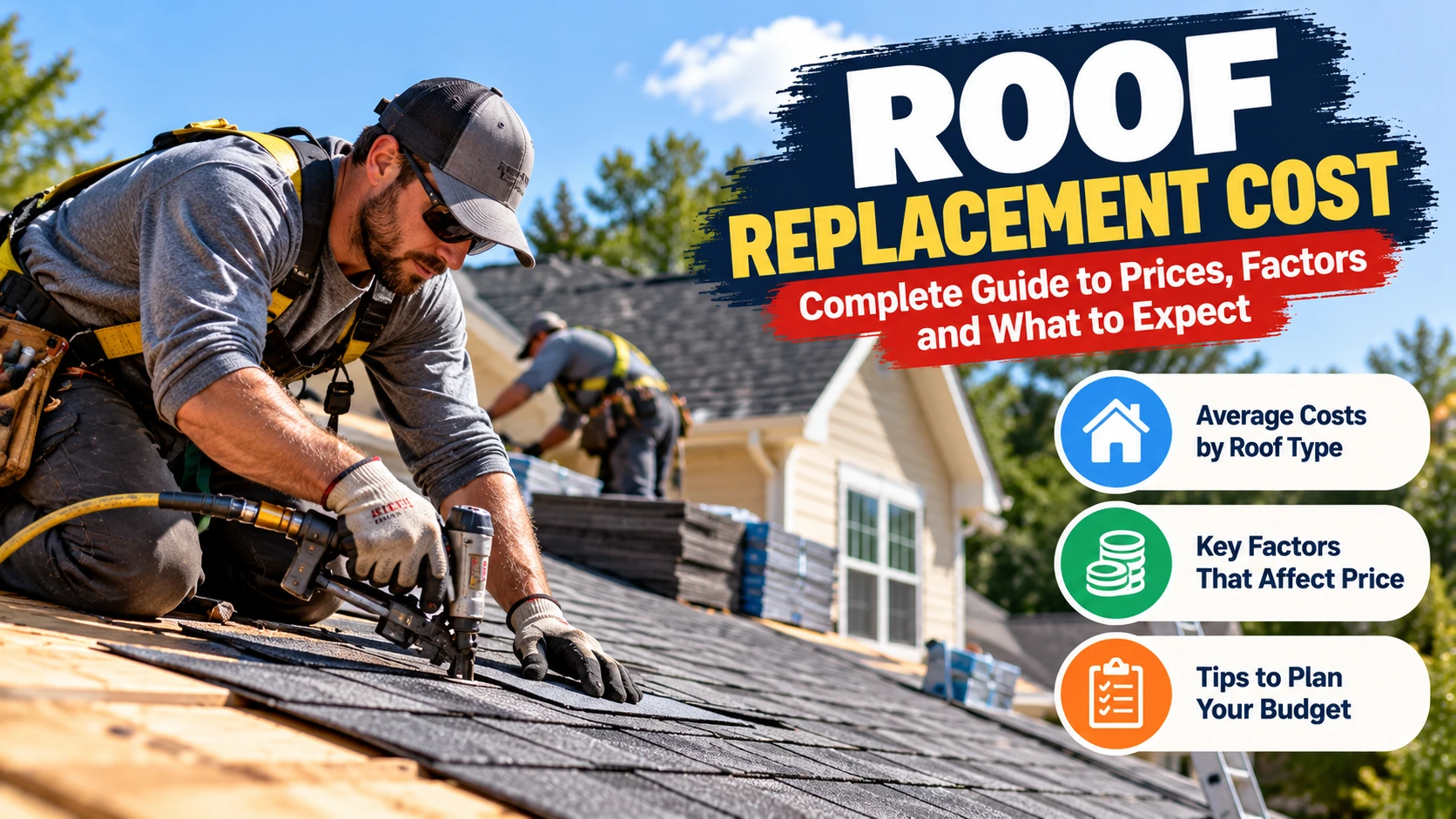
A new roof is one of the largest repairs most homeowners ever pay for, and quotes can vary by thousands of dollars for the same house. For a typical asphalt shingle roof on an average-size home, industry cost guides put most replacements somewhere between about $9,000 and $18,000 in 2026, with complex roofs, larger homes and premium materials costing considerably more.
This guide explains what drives the price, what different roofing materials cost per square foot, how to tell whether you need a full replacement and how to compare contractor quotes. The figures are national estimates from published cost guides. Your actual price depends on your roof, your location and local labor rates, so treat these numbers as a starting point for getting quotes.
How roofers price a roof
Roofers price jobs by the “square,” which equals 100 square feet of roof surface. Your roof is larger than your home’s floor area because of slopes and overhangs, so a 2,000-square-foot house often has a roof of 2,200 square feet or more, which is about 22 squares.
The total price combines materials, labor, removal of the old roof and extras such as underlayment, flashing, ventilation and permits. Labor is a large share of the cost, often around half or more, which is why prices vary so much between regions. Steep pitches, multiple roof planes, dormers, skylights and chimneys all add time and cost, and complex rooflines can add 20% to 30% to the price per square foot.
Roof replacement cost by material
Material choice has the biggest effect on price and lifespan. The ranges below are installed costs per square foot drawn from 2026 cost guides.
| Material | Typical installed cost per sq ft | What to know |
|---|---|---|
| 3-tab asphalt shingles | About $4 to $6 | Lowest cost; shorter lifespan, often around 15 to 20 years |
| Architectural asphalt shingles | About $5 to $9 | Most popular choice; thicker, better looking and longer lasting than 3-tab |
| Metal (steel panels) | About $10 to $16 | Long lasting and durable; higher upfront cost |
| Standing seam metal | About $14 to $22 | Premium metal option with concealed fasteners |
| Wood shake | About $8 to $14 | Natural look; needs more maintenance and may face fire-code limits |
| Clay or concrete tile | About $10 to $27 | Very long lasting; heavy, so the structure must support it |
| Slate | About $10 to $30 or more | Top-tier lifespan and price; requires specialist installers |
Removing the existing roof is usually priced separately or built into the quote, and typically runs about $1 to $2.40 per square foot for each layer of shingles. If your home has two layers of old shingles, expect a higher tear-off cost.
Example: A homeowner has a simple, low-slope roof of about 22 squares (2,200 square feet). At $5 to $9 per square foot for architectural shingles, the installed cost would land roughly between $11,000 and $19,800 before any extra repairs. If the roofer finds rotted decking during tear-off, replacing those sheets adds to the bill, which is why good quotes include a per-sheet price for decking repairs.
Signs you need a new roof
Not every leak means you need a full replacement. A roof that is relatively young with localized damage can often be repaired. Replacement becomes more likely when the roof is near the end of its expected life and shows widespread problems such as curling, cracked or missing shingles across large areas, granules collecting in gutters, sagging sections, daylight visible in the attic, or repeated leaks in different spots.
An inspection by a licensed roofer can tell you whether repairs will buy you several more years or whether replacement is the better long-term value. If the damage came from a storm, contact your homeowners insurance company before work begins, since storm and hail damage may be covered depending on your policy and deductible.
How to get fair quotes
- Get at least three written quotes. Ask each contractor to inspect the roof in person rather than quoting from photos or satellite images alone.
- Compare the same scope. Check that every quote includes tear-off, underlayment, flashing, ventilation, drip edge, cleanup and permits.
- Ask about decking repairs. Get the price per sheet for replacing damaged decking so surprises are predictable.
- Check licensing and insurance. Confirm the contractor’s state or local license where required, plus liability and workers’ compensation insurance.
- Understand the warranties. Ask about both the manufacturer’s material warranty and the contractor’s workmanship warranty, in writing.
- Avoid large upfront payments. A reasonable deposit is normal, but be wary of anyone who wants most of the money before work starts.
Ways to lower the cost
Choosing architectural asphalt shingles instead of premium materials keeps costs manageable while still offering a good lifespan. Scheduling outside the busiest season, often late fall or winter in milder climates, can sometimes mean better pricing and availability. Fixing ventilation and flashing problems during the replacement prevents early failure and future repair bills.
Financing options include home equity loans or lines of credit, contractor financing and personal loans, each with different interest costs. Compare the total cost of borrowing, not just the monthly payment. Some utilities and local programs also offer incentives for energy-efficient or impact-resistant roofing.
Be cautious after major storms, when out-of-town contractors may go door to door offering fast replacements. Verify their license, local address and insurance, and never sign over your insurance claim without understanding the terms.
Common questions
How much does a new roof cost on average
For a typical asphalt shingle roof on an average-size home, many 2026 cost guides place most replacements between about $9,000 and $18,000. Larger, steeper or more complex roofs and premium materials cost more.
How long does a roof replacement take
Many asphalt roofs on average-size homes take one to three days, depending on size, weather, complexity and crew size. Tile, slate and metal roofs usually take longer.
Can I put new shingles over old ones
Some local codes allow a second layer, but it adds weight, hides decking problems and can shorten the new roof’s life. Many roofers recommend a full tear-off instead.
Does homeowners insurance pay for a new roof
Insurance may pay for damage from covered events such as storms or hail, minus your deductible. It generally does not pay for a roof that has simply worn out with age.
Before you replace your roof
Get a professional inspection, collect at least three detailed written quotes that cover the same work and check each contractor’s license, insurance and warranties. Choose a material that fits your budget and climate, and keep every agreement in writing.
Editorial note: Cost figures are national estimates drawn from published 2026 roofing cost guides and vary widely by location, roof design and contractor. This article is general information, not a quote or professional advice. Always get written estimates from licensed local contractors and follow local building codes.