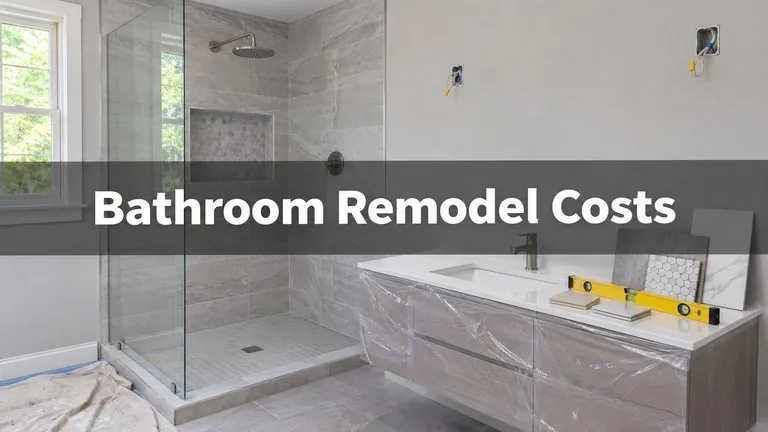
A bathroom remodel in the US usually costs between $6,000 and $18,000 in 2026, with about $12,000 as a common midpoint for a full bath. A half bath refresh can cost as little as $1,200 to $5,000, while a primary bathroom with a walk-in tile shower, double vanity and new layout often costs $25,000 to $30,000 or more. Contractor-priced projects run higher: the 2025 Cost vs. Value report puts a midrange full-bath remodel at $26,138 and an upscale primary bath at $81,612.
The gap between those numbers comes down to labor and layout. Labor is roughly half of a typical bathroom budget, and moving a toilet or shower drain adds plumbing, floor framing work and inspections. This guide covers costs by bathroom type, a tub-to-shower conversion, the main line items, which jobs you can safely do yourself, resale return, and how long the work takes.
Bathroom remodel cost by type
The size of the room sets a floor on cost, but the finishes and whether anything moves decide where you land. These ranges are national homeowner-reported figures from Fixr’s 2026 data.
| Bathroom type | Typical 2026 cost | What pushes it higher |
|---|---|---|
| Half bath or powder room (toilet and sink) | $1,200 to $15,000 | Wall tile, a custom vanity, moving the toilet |
| Full guest bath (toilet, sink, tub or shower) | $3,500 to $20,000 | Tiled shower walls, replacing the tub, new lighting and fan circuits |
| Primary bathroom | $7,000 to $30,000 and up | Walk-in shower, double vanity, freestanding tub, heated floor, relocated plumbing |
| Tub-to-shower conversion only | $1,200 to $10,000 | Tile versus acrylic surround, glass door, curbless entry |
| Midrange full bath (Cost vs. Value 2025, contractor-priced) | $26,138 | Full gut of a 5-by-7-foot bath with new tub, tile, vanity and fixtures |
| Upscale primary bath (Cost vs. Value 2025) | $81,612 | Expanding to about 100 sq ft, stone counters, frameless glass, high-end fixtures |
Per square foot, bathrooms average about $120 and range from $70 to more than $400. That makes a 5-by-7-foot hall bath (35 square feet) roughly $2,450 to $14,000 and a 10-by-10 primary bath roughly $7,000 to $40,000. Bathrooms cost more per foot than almost any other room because a small space holds plumbing, waterproofing, tile, electrical and ventilation.
Where a bathroom budget goes
Labor typically takes 40% to 65% of the total, which is why two bathrooms with the same finishes can be priced very differently. Here are the main line items:
- Shower or tub: about 25% of the budget. A prefabricated acrylic surround is the low-cost option. A tiled shower with a mortar bed or a foam pan system costs more but lasts longer and looks custom.
- Vanity and storage: also about 25%, typically $1,500 to $4,500 installed. The countertop alone runs about $360 to $1,100.
- Tile: installer labor runs about $8 to $14 per square foot. Materials range from a few dollars for basic ceramic to $40 per square foot for marble or granite tile. Floor tile alone often costs $600 to $1,800.
- Plumbing: about 10% of the budget if nothing moves. Plumbers charge roughly $75 to $150 per hour, and relocating a toilet drain on a concrete slab means cutting and patching the slab.
- Electrical: electricians charge about $70 to $130 per hour. Most remodels trigger code updates such as GFCI protection, a properly ducted exhaust fan, and sometimes a dedicated circuit.
- Demolition: $600 to $2,300 when billed separately.
- Permits: about 4% of the total, often near $500.
Tub-to-shower conversion costs
Swapping an unused tub for a walk-in shower is one of the most requested bathroom projects. Removing the tub costs about $200 to $1,000, and building the shower costs about $1,000 to $9,000, for a total around $1,200 to $10,000.
Three choices move the price. An acrylic or solid-surface shower kit sits at the low end. A fully tiled shower with a niche and a glass door sits at the high end. A curbless (zero-entry) shower usually costs the most because the floor has to be recessed or built up so water drains toward the shower.
One caution if you plan to sell: many buyers with young children want at least one tub in the house. If your only full bath has the only tub, a conversion can narrow your buyer pool. Converting the tub in a primary bath while keeping one in the hall bath avoids that problem.
Example: Luis converts a 60-inch tub alcove in his primary bath to a tiled walk-in shower. Tub removal and disposal cost $600. A new shower valve and drain cost $900 in plumbing. A waterproofed foam pan and wall system with mid-grade porcelain tile, including labor at about $12 per square foot for roughly 100 square feet of wall and floor, come to $3,400. A frameless glass panel adds $1,200, and the permit is $250. His total is $6,350, in the middle of the national range.
DIY versus hiring a pro
Doing parts of the work yourself can save several thousand dollars, mostly in labor. The trick is knowing which tasks forgive mistakes. A good dividing line is water: anything that keeps water inside the shower or the pipes belongs with a pro unless you have real experience.
Reasonable DIY jobs:
- Demolition of vanities, mirrors, accessories and non-shower tile (wear eye protection and shut off water first)
- Painting, new mirrors, towel bars and lighting fixtures on existing wiring
- Swapping a toilet or a drop-in vanity in the same location
- Installing click-together vinyl plank flooring
Jobs better left to licensed pros:
- Shower pans and wall waterproofing. A failed pan leaks slowly into the subfloor, and repairs mean tearing out the finished shower.
- Moving drains, vents or supply lines
- New circuits, GFCI work and exhaust fan ducting to the outside
- Anything that requires a permit and inspection in your city
Example: Keisha refreshes a powder room herself. She paints ($80), replaces the vanity in the same spot ($450 for a 30-inch unit with top), installs a new faucet ($120), mirror ($90), light fixture ($110) and vinyl plank flooring ($180 for 25 square feet). She pays a plumber $250 to reconnect the drain and supply lines. Her total is $1,280, compared with quotes of around $3,500 for the same work fully hired out.
Resale value of a bathroom remodel
National figures from the 2025 Cost vs. Value report show how much of the cost tends to come back at sale:
- Midrange bath remodel: $26,138 cost, $20,915 resale value, 80% recouped
- Universal design bath (curbless shower, grab bars, wider door, comfort-height toilet): $42,183 cost, 61.2% recouped
- Bathroom addition, midrange: $60,645 cost, 53.3% recouped
- Upscale bath remodel: $81,612 cost, $34,000 resale value, 41.7% recouped
A clean midrange bathroom earns back far more than a luxury one. If resale is the goal, put money into new tile, a good vanity, bright lighting and a working fan rather than heated floors or steam showers.
How long a bathroom remodel takes
Most bathroom remodels take two to four weeks of work, and complex projects can run up to 12 weeks. The order of work explains why:
- Plan the layout and pick every fixture, tile and vanity before work starts. Special-order items set the schedule.
- Pull the permit if plumbing, electrical or walls change.
- Demolition and disposal, usually one to two days.
- Rough plumbing and electrical, then the rough inspection.
- Shower pan and waterproofing. Many systems need a flood test of 24 hours or more before tile goes on.
- Tile walls and floor, then grout. Allow curing time before sealing.
- Install vanity, countertop, toilet, fixtures, glass and accessories.
- Final inspection and punch list.
If you only have one bathroom, plan where you’ll shower for at least two weeks before you sign.
Common questions
How much does a small bathroom remodel cost?
A small 5-by-7-foot bathroom typically costs about $2,450 to $14,000 to remodel, based on national averages of $70 to $400 per square foot. Keeping the toilet, tub and sink in place and choosing an acrylic surround keeps it near the low end.
Is a tub-to-shower conversion worth it?
It is worth it if nobody uses the tub and the home has another tub elsewhere. Expect $1,200 to $10,000 depending on finishes. Removing the only tub in a house can put off some buyers with young children.
What is the most expensive part of a bathroom remodel?
Labor, which usually makes up 40% to 65% of the total. Among materials, the shower or tub and the vanity each take about a quarter of the budget.
Can I remodel a bathroom without a permit?
Cosmetic work such as painting, replacing a vanity in place or new flooring often needs no permit. Moving plumbing, adding circuits or changing walls usually requires one. Rules vary, so check with your local building department before demolition.
How much does a bathroom remodel add to home value?
Nationally, a midrange bath remodel recouped about 80% of its cost at resale in the 2025 Cost vs. Value report. An upscale remodel recouped about 41.7%.
Before you start
- Decide whether the toilet, shower and sink stay in place. That decision sets most of the budget.
- Buy all fixtures and tile, or confirm lead times, before demolition.
- Ask each bidder which waterproofing system they use and whether they flood-test the pan.
- Confirm the exhaust fan vents outside, not into the attic.
- Add a 10% to 15% contingency for rotted subfloor or old supply lines found behind walls.
- Arrange a backup bathroom for the weeks of work.
Editorial note: This article is general information. Cost and resale figures were checked as of November 2026 and vary by region and contractor, so confirm pricing with licensed local contractors and permit requirements with your local building department.