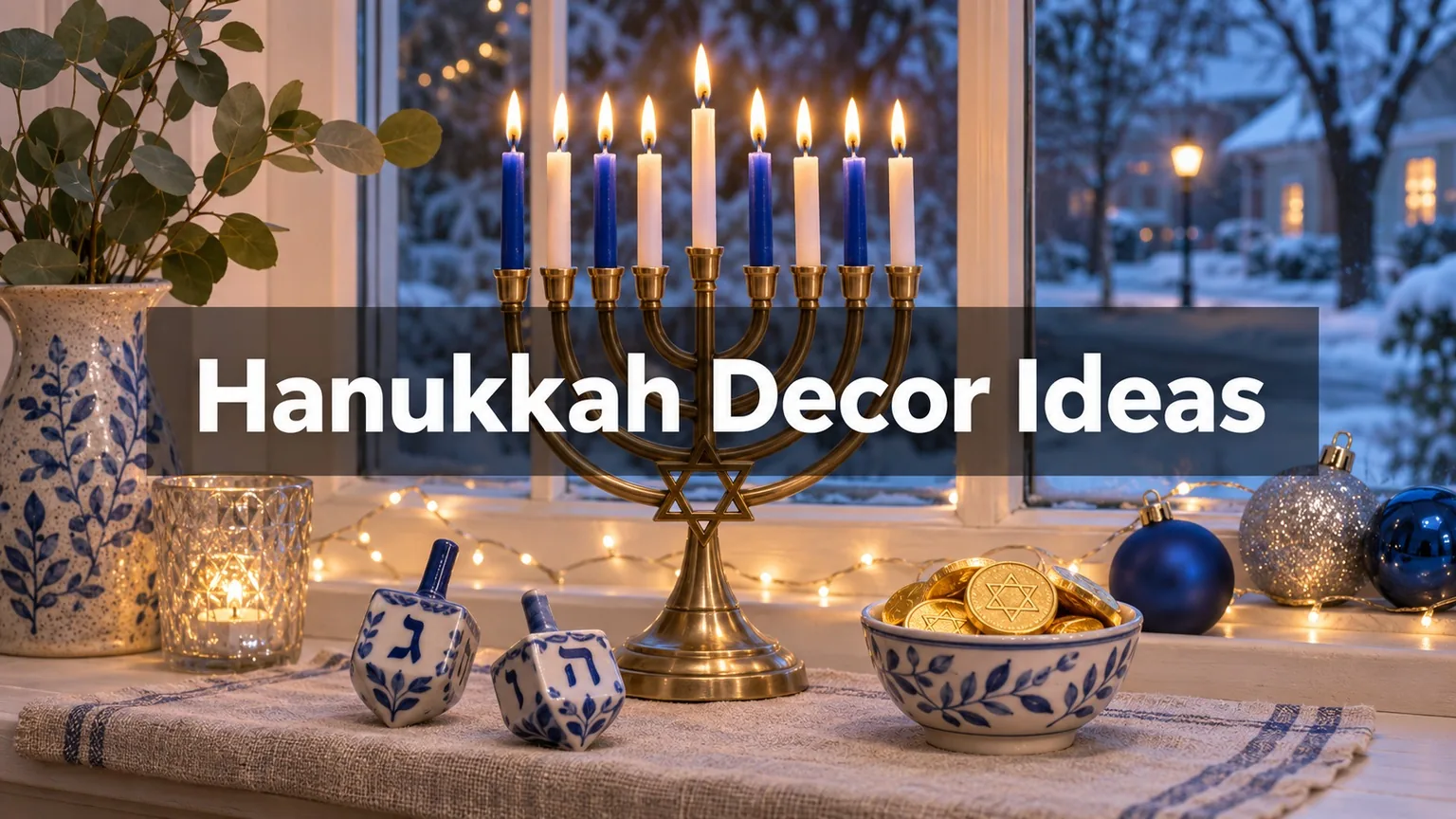
Hanukkah 2026 begins at sundown on Friday, December 4, and ends at nightfall on Saturday, December 12. The heart of any Hanukkah decor is the menorah (properly called a hanukkiah), ideally placed where it can be seen from outside. Around it, most families build a simple palette of blue, white and silver or gold, add dreidels and gelt to the table, and string soft lights in a front window. You can decorate a whole home for well under $100 if you focus on a few spots people actually see.
This guide goes room by room, compares candle, oil and electric menorahs, walks through setting up a window display, and covers the fire safety habits that matter during eight nights of open flames. Ideas work whether you are decorating a house, an apartment or a dorm room, and whether your family is observant or celebrating more casually.
Start with the menorah
The menorah is the one decoration with real meaning and real rules. The custom is to display it publicly to share the story of the miracle, so many families set it in a front window facing the street. Others place it by the front door, on the side opposite the mezuzah. In an upper-floor apartment where no one can see the window from outside, a table in the main room works fine.
Candles go into the menorah from right to left, adding one each night, and are lit from left to right, so the newest candle is lit first. The shamash, the helper candle that sits higher or apart from the others, lights the rest. Over eight nights you use 36 candles plus 8 for the shamash, which is why a standard box holds 44.
The 2026 calendar has a wrinkle: both the first night (December 4) and the eighth night (December 11) fall on Fridays. Families who keep Shabbat light the menorah on those evenings before the Shabbat candles, before sundown, and use candles large enough to burn until at least half an hour after dark. On Saturday, December 5, the menorah is lit after Shabbat ends.
Menorah types compared
| Type | Fuel | Typical burn time | Best for | Watch out for |
|---|---|---|---|---|
| Standard candle menorah | Small wax Hanukkah candles | About 30 to 45 minutes | Most homes, kids helping light | Dripping wax, tipping candles |
| Oil menorah | Olive oil with wicks in glass cups | As long as you fill it, often 1 to 3 hours | Traditional look, Friday nights | Spills, hot glass, more setup |
| Large or Shabbat-length candles | Taller wax candles | Several hours | Friday night before Shabbat | Need a menorah with wider cups |
| Electric or LED menorah | Plug-in or batteries | Unlimited | Dorms, rentals with no-flame rules, extra window displays | Many traditions do not count it for the lighting itself |
Many families use both: a real flame menorah for the blessing and an LED menorah in a second window or on a high shelf where a candle would be risky.
Front window and entry ideas
The window is where Hanukkah decor does the most work, because neighbors and guests see it first.
- Set the menorah on a sturdy sill or a small table pushed against the window, with a few inches of clearance from glass and curtains.
- Hang a strand of warm white or blue string lights around the window frame, kept well away from the candles.
- Use removable window clings of a Star of David, dreidels or a menorah on upper panes.
- Hang a simple blue and white wreath or a felt dreidel garland on the front door.
- Line the walkway with white luminaries (LED tea lights in paper bags) for a party night.
Table and centerpiece ideas
Hanukkah is built around family meals and food fried in oil, so the table deserves attention.
- Lay a white or ivory tablecloth with a blue runner, or reverse it with a navy cloth and a silver runner.
- Fill a clear glass bowl or vase with gelt, dreidels and a few blue ornaments for a centerpiece that kids can raid later.
- Set out small bottles of olive oil with herb sprigs as a nod to the oil in the story, and to serve with bread.
- Use place cards shaped like dreidels or written on small cards tied with blue ribbon.
- Add a scatter of silver or gold confetti stars, or skip it if you have toddlers and a vacuum you dislike.
Example: Rachel is hosting 12 people for latkes on the fourth night and has $60 to spend on decor. She buys a blue table runner ($12), three bags of gelt ($15), a pack of 12 wooden dreidels ($10) and blue and white napkins ($8). She fills two glass vases she already owns with gelt and dreidels for centerpieces, uses the dreidels as place card holders, and spends the last $15 on a strand of blue LED lights for the dining room window. Total: $60, and the dreidels go home with the guests as favors.
Living room, mantel and stairs
A few touches around the room make the season feel present without competing with the menorah.
- Swag a garland of blue and silver beads or felt dreidels across the mantel or a bookshelf.
- Hang a “Happy Hanukkah” banner over a doorway, especially for kids’ parties.
- Swap throw pillow covers to navy, white or silver for the eight nights.
- Wrap a staircase rail with white lights and a blue ribbon spiral.
- Create a gift station: a basket or shelf where each night’s small gifts wait, wrapped in blue and white paper.
Some interfaith families also decorate a “Hanukkah bush” with blue and silver ornaments, Stars of David and dreidels. Whether you do this is a family choice, and plenty of Jewish households prefer to keep Hanukkah decor separate from Christmas symbols.
Set up a safe menorah window display
December is the peak month for home candle fires, according to the National Fire Protection Association. A menorah burns every night for over a week, often in a window with curtains, so a few minutes of setup pays off.
- Choose a spot with nothing flammable within at least 12 inches above or beside the menorah, including curtains, blinds, paper decorations and greenery.
- Place the menorah on a heat-resistant tray, a metal baking sheet covered with foil, or a ceramic platter to catch drips.
- Check that the surface is level and stable, and that the window will not be opened or drafty near the flames.
- Seat each candle firmly. If candles wobble, warm the base slightly with a match and press them into place.
- Light at the right time (after nightfall on most nights; before sundown on Friday) and keep an adult in the room until the candles burn out.
- Keep pets and young children back with a rule such as no one within arm’s reach of the window while candles burn.
- After the last night, let the wax harden, then pop it off with a butter knife or warm the menorah in the freezer and flake it off.
Example: Eli and Sam rent an apartment where the lease bans open flames. They light a small candle menorah at the kitchen table on a baking sheet for the blessing each night and stay with it until it goes out, which the landlord allowed when they asked in writing. For the street-facing window they use a $25 battery LED menorah with a timer, so the window glows every evening even when they are out.
Crafts that double as decor
Homemade pieces give kids something to do over eight nights and make decorations that come out every year:
- Paper chain garlands in blue and white, adding one link each night as a countdown.
- Salt dough Stars of David painted silver, hung on ribbon in a window.
- Coffee filter or tissue paper “stained glass” menorahs taped to a sunny window.
- Painted wooden dreidels lined up along a shelf.
- A clay or air-dry ceramic menorah made by older kids, used for an electric tea light display rather than real candles unless it is made from heat-safe material.
Common questions
When should Hanukkah decorations go up?
Many families decorate a few days before the first night, which in 2026 is Friday, December 4. Some put up lights and window decor at the start of December. Decorations usually come down after the last candle burns on the eighth night.
What are the traditional Hanukkah colors?
Blue and white are the most common, echoing the colors of the Israeli flag and the tallit (prayer shawl). Silver and gold are popular accents, gold especially because of the gelt and candlelight.
Where should the menorah be placed?
Tradition favors a spot visible from outside, usually a front window or near the front door opposite the mezuzah. If that is not practical or safe, place it on a table inside where family members gather, away from anything flammable.
Can you use an electric menorah?
Yes for decoration, and many families use one in windows or where open flame is not allowed. Many traditional authorities hold that an electric menorah does not fulfill the lighting itself, so families who observe that practice light a candle or oil menorah as well.
How many candles do you need for Hanukkah?
One menorah uses 44 candles over the eight nights: 36 for the nightly candles and 8 for the shamash. If several family members light their own menorahs, buy a box for each.
Before you decorate
- Mark the dates: first candle Friday, December 4, last candle Friday, December 11, with Hanukkah ending Saturday, December 12.
- Buy candles early, plus taller ones for the two Friday night lightings.
- Pick your menorah spot and clear 12 inches around it.
- Set a palette (blue and white, or blue with silver or gold) and stick to it so pieces look intentional.
- Have a drip tray, matches and a working smoke alarm in the room.
- Plan one table centerpiece and one window display before anything else.
Editorial note: This article is general decorating information. Dates and safety guidance were checked as of November 2026; follow your community’s or rabbi’s practice for lighting customs, and see the National Fire Protection Association for candle safety.