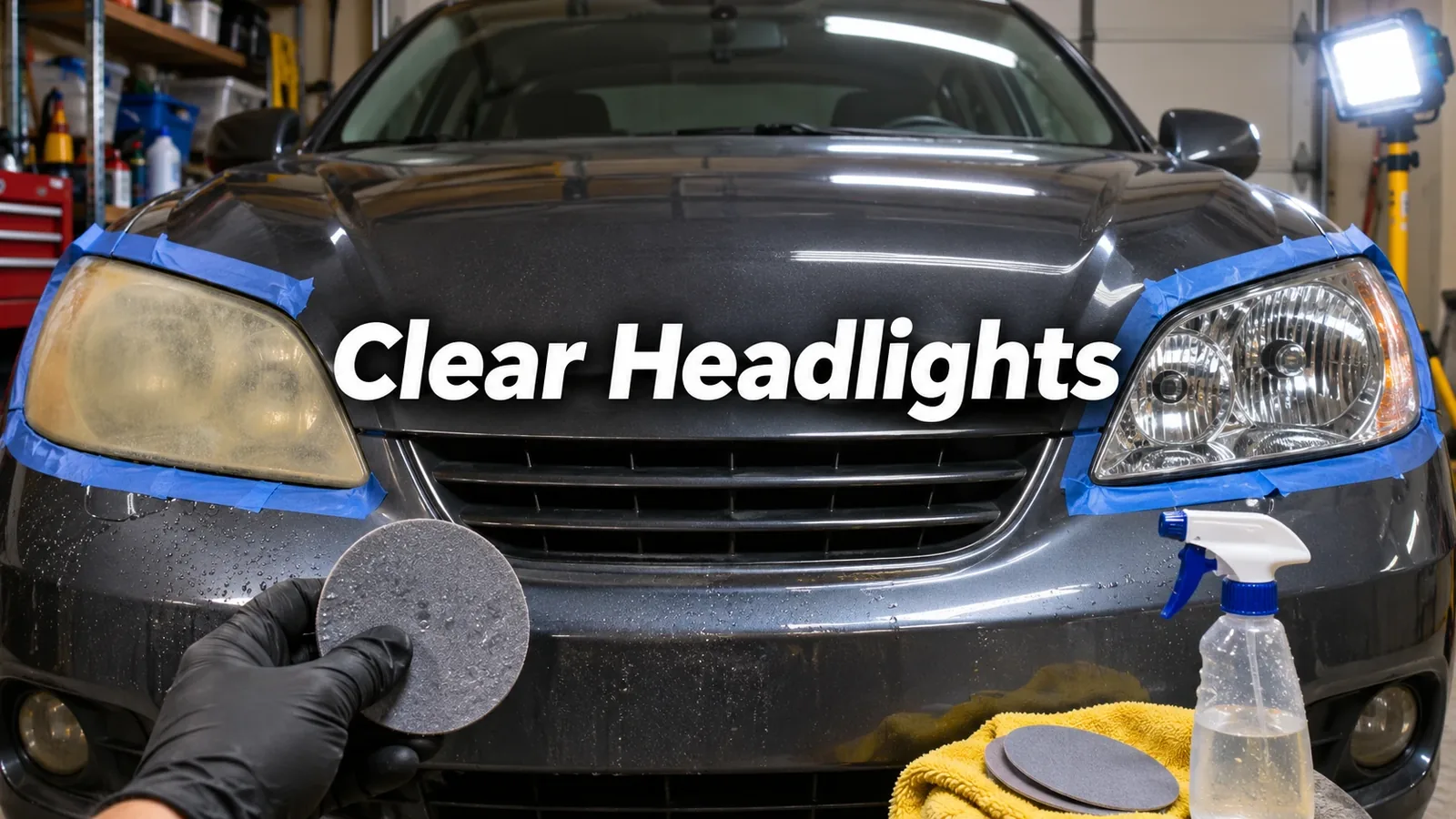
Headlight restoration removes the yellowed, oxidized outer layer of plastic headlight lenses by sanding and polishing, then seals the lens with a UV-resistant clear coat so it doesn’t cloud again quickly. A DIY kit costs about $15 to $30 and takes an hour or so; a professional restoration usually runs $50 to $150 for both headlights. AAA testing found restoration brings cloudy headlights back to roughly 70% of the light output of new ones, while replacement restores up to 100%, so restoration is the budget fix and replacement is the better fix for badly degraded lenses.
The difference matters more than most drivers think. In the same AAA research, heavily clouded headlights produced only about 20% of the light of new headlights, and lenses can start to degrade in as little as three to five years. With long winter nights here, it’s a good time to check yours. Below is how to judge your headlights, how to restore them yourself, and how the costs compare.
Why headlights turn cloudy and yellow
Most modern headlight lenses are polycarbonate plastic, which is light and shatter resistant but breaks down in sunlight. The factory applies a UV-protective hard coat. Over years of sun, road grit, car washes and harsh cleaners, that coating wears off, and the plastic underneath oxidizes and turns hazy or yellow. Cars parked outside in sunny states tend to show it first.
Fogging on the inside of the lens is a different problem. Moisture inside usually means a cracked housing or failed seal, and sanding the outside won’t fix it.
DIY vs professional restoration vs replacement
| Option | Typical cost (pair) | Time | Light output vs new (AAA) | How long it lasts |
|---|---|---|---|---|
| Quick fixes (toothpaste, bug spray) | Under $5 | 15 minutes | Small, short-lived improvement | Weeks |
| DIY restoration kit with UV sealant | $15 to $30 | 45 to 90 minutes | About 70% | Often 1 to 3 years |
| Professional restoration | $50 to $150 | About 1 hour | About 70% | Often 1 to 3 years; some shops warranty it |
| Aftermarket replacement assemblies | $150 to $500+ | 1 to 3 hours | About 83% to 90% | Many years |
| Original-equipment (OEM) replacement | $300 to $2,000+ depending on halogen, LED or adaptive | 1 to 3 hours; some need bumper removal | 100% | Many years |
Replacement prices vary enormously. A halogen headlight assembly for an older compact car can be under $150 per side, while LED or adaptive headlights on newer vehicles can cost $1,000 or more per side. AAA also found that some aftermarket parts produced more glare for oncoming drivers, so buy from reputable sources and check that parts are DOT compliant.
How to restore headlights with a DIY kit
Kits differ, so follow the instructions in yours. Pick one that includes a UV-blocking clear coat or sealant; kits that only polish look good for a few weeks and then yellow again. Work in the shade, on a dry day above about 50°F.
- Wash the headlights with soap and water and dry them completely.
- Mask the paint and trim around each lens with two layers of painter’s tape. Sandpaper scratches paint quickly.
- Wet-sand the lens with the coarsest grit in the kit (often 500 to 800), using straight back-and-forth strokes and keeping the surface wet. The lens will look frosted, which is normal.
- Move to the next finer grit (often 1,500, then 2,000 to 3,000), sanding in the opposite direction each time until the scratches from the previous grit are gone.
- Rinse, dry, and apply the polishing compound by hand or with the drill attachment if included. The lens should turn clear.
- Wipe the lens with the prep solution or isopropyl alcohol so the sealant can bond.
- Apply the UV clear coat in thin, even strokes without going back over wet areas. Let it cure as directed, usually several hours away from rain and dew.
- Remove the tape and check your headlight aim against a garage door or wall at night.
Example: Jen’s 2014 sedan has yellow, hazy lenses and she struggles to see on dark rural roads. A shop quoted $110 to restore both and a dealer quoted $780 for two OEM halogen assemblies. She buys a $22 kit with a UV sealant, spends about 80 minutes on a Saturday, and the lenses come out clear. She notes the date so she can check them again in a year.
Do toothpaste and other quick hacks work?
Toothpaste, baking soda and bug repellent can remove a light haze because they’re mild abrasives or solvents. The improvement is real but small, and with no UV protection left on the plastic, the lens clouds again within weeks. Some solvent-based products can also damage the plastic. If your headlights are more than slightly hazy, a proper kit with sanding steps and a sealant is worth the extra $15 to $20.
When replacement makes more sense
Restoration works on surface oxidation. Replace the headlight assembly instead if:
- Moisture or condensation forms inside the lens.
- The lens is cracked, chipped or pitted deeply from road debris.
- The reflector inside looks burned, flaking or dull.
- You’ve restored the lenses before and they clouded again within months.
- Your car failed a safety inspection for headlight output or condition and restoration didn’t fix it.
Some newer vehicles have adaptive or matrix LED headlights with sensors and modules built in; replacing those can require calibration, so get a quote from a dealer or experienced shop. Insurance may cover headlight replacement if the damage came from a covered event, like a collision or a rock strike under comprehensive coverage, but not from normal aging.
Example: Darnell’s 12-year-old pickup has deep pitting and moisture inside one lens. Restoration won’t address the moisture, so he buys a pair of DOT-compliant aftermarket assemblies for $190, installs them himself in about an hour, and has the aim checked during his next oil change.
How to keep headlights clear longer
- Park in a garage or shade when you can, since UV exposure drives most yellowing.
- Wash headlights with car-wash soap, not household glass cleaners or harsh degreasers.
- Apply a UV-protective coating or paint protection film after restoring. Clear film can add years.
- Wax or use a sealant on the lenses every few months along with the paint.
- Check the lenses each fall before the long nights of winter.
Headlight performance also depends on aim and bulb condition. Bulbs dim with age, and halogen bulbs are often replaced in pairs so both sides match. The Insurance Institute for Highway Safety rates headlights as part of its crash test ratings, which is useful when shopping for a car.
Common questions
How long does headlight restoration last?
With a UV clear coat, often one to three years depending on sun exposure and care. Without a sealant, haze typically comes back within weeks to a few months.
Is headlight restoration worth it?
For mild to moderate yellowing, yes. A $15 to $30 kit can make a big difference in nighttime visibility. For deep damage, moisture inside, or a car you plan to keep for years, replacement gives more light.
Can cloudy headlights fail inspection?
In states with safety inspections, headlights that are too dim, damaged or improperly aimed can fail. Rules vary by state, so check with your inspection station or DMV.
Can I use a drill for headlight restoration?
Many kits include drill attachments for sanding and polishing, which saves time. Keep the drill at low speed and keep moving to avoid heating and warping the plastic.
Do LED headlights get cloudy too?
Yes. The light source doesn’t matter; the outer polycarbonate lens yellows the same way on halogen, HID and LED headlights.
Before you restore your headlights
- Check whether the haze is on the outside (restorable) or inside (likely replacement).
- Choose a kit with a UV-blocking sealant, not polish alone.
- Get a replacement quote so you know what restoration is saving you.
- Pick a dry, shaded day above about 50°F and allow time for curing.
- Check aim and bulb brightness after the lenses are clear.
Editorial note: This article is general information. Costs are typical ranges checked as of November 2026 and vary by vehicle and region; see AAA’s headlight research, your owner’s manual and your state DMV for inspection rules.