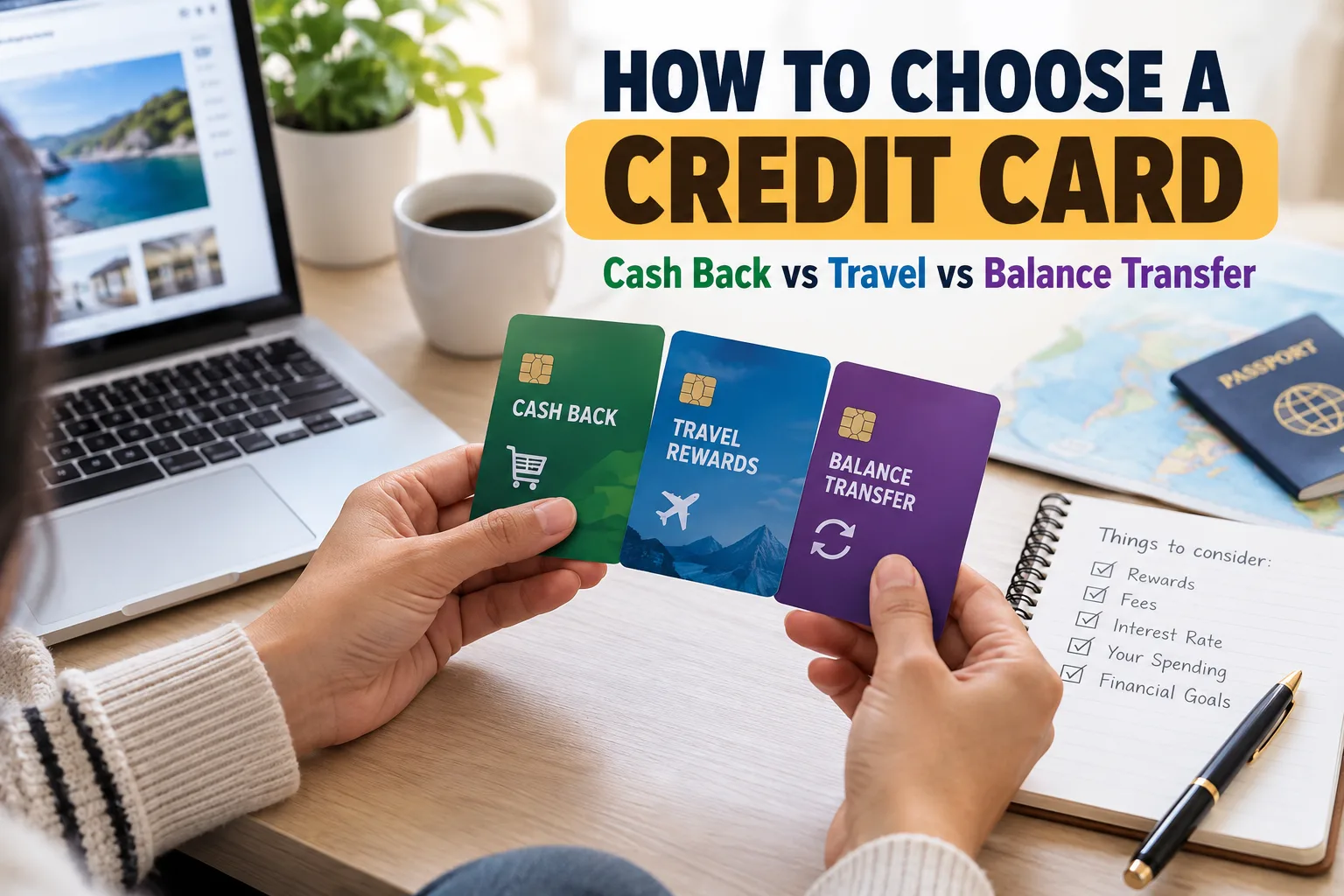
The best credit card is not the one with the biggest sign-up bonus. It is the one that fits how you spend and, most importantly, how you pay. A rewards card can earn you money if you pay in full every month, but if you carry a balance, interest can quickly cost more than any rewards you earn.
This guide explains the main types of credit cards, how to match a card to your habits, which costs and terms to compare and how to apply without hurting your credit. It is general information, not financial advice, and it does not recommend specific cards. Always read the card’s terms before applying.
Start with how you pay
Before comparing rewards, be honest about one question: do you pay your balance in full every month? If you do, focus on rewards and benefits, because you will rarely pay interest. If you often carry a balance, focus on a low ongoing interest rate or a balance transfer offer, because the interest rate matters far more than rewards. If you are new to credit or rebuilding it, focus on cards designed for building credit.
The main types of credit cards
| Card type | Best for | Watch out for |
|---|---|---|
| Flat-rate cash back | People who want simple rewards on every purchase | Rewards are only valuable if you avoid interest |
| Category cash back | People who spend heavily on groceries, gas or dining | Spending caps, rotating categories that need activation |
| Travel rewards | Frequent travelers who can use points or miles well | Annual fees and complex redemption rules |
| Balance transfer | Paying down existing credit card debt | Transfer fees and the rate after the intro period ends |
| Low interest | People who sometimes carry a balance | Usually few or no rewards |
| Secured and student cards | Building or rebuilding credit | Low limits; secured cards require a deposit |
Cash back vs travel rewards
Cash back cards are simple: you earn a percentage of your spending back as a statement credit, deposit or check. Flat-rate cards pay the same rate on everything, while category cards pay more in certain areas such as groceries or gas. If you want rewards without effort, cash back is usually the easier choice.
Travel cards earn points or miles that can be worth more than cash back when redeemed for flights or hotels, especially through airline or hotel partners. They often come with annual fees and benefits such as travel credits, lounge access or travel insurance. They tend to be worth it only if you travel enough to use the benefits and are willing to learn how the points work.
Example: Someone spends about $1,500 a month and pays in full. A flat-rate cash back card with no annual fee gives steady, simple rewards. A travel card with an annual fee might earn more value if they fly several times a year and use its travel credits, but if they rarely travel, the annual fee could wipe out the benefit. Comparing your real spending against each card’s rewards and fees shows which comes out ahead.
Balance transfer cards
A balance transfer card lets you move existing credit card debt to a new card with a low or 0% introductory interest rate for a set period. This can save a lot of interest and help you pay debt down faster, but there are costs. Most cards charge a balance transfer fee, commonly 3% to 5% of the amount transferred, and the low rate ends after the promotional period, when the regular rate applies to any remaining balance.
A balance transfer works best with a plan: divide the balance by the number of months in the intro period and pay at least that much each month. Avoid adding new purchases to the card, which can make the debt harder to clear before the promotion ends.
Costs and terms to compare
Look at the annual percentage rate (APR) for purchases, balance transfers and cash advances; the annual fee; balance transfer and foreign transaction fees; late payment fees; and how long any introductory rate lasts. Check how rewards are earned and redeemed, whether they expire and any spending caps.
Federal law requires card issuers to show key rates and fees in a standardized table, often called the Schumer box, before you apply. Reading it is the quickest way to compare cards fairly.
Step-by-step: choosing and applying
- Check your credit. Review your credit reports and score so you know which cards you are likely to qualify for.
- Decide your priority. Choose between rewards, low interest, a balance transfer or building credit based on how you pay.
- Compare a few cards. Compare APRs, fees, rewards and benefits using each card’s official terms.
- Use prequalification tools. Many issuers let you check offers with a soft inquiry that does not affect your score.
- Apply for one card at a time. Each application usually triggers a hard inquiry, and several in a short period can lower your score.
- Set up autopay. Automatic payments help you avoid late fees and protect your credit history.
Using a credit card responsibly
Paying on time and keeping your balances low compared with your credit limits are two of the most important factors in your credit score. Try to pay the full statement balance each month to avoid interest. If you cannot, pay as much as possible above the minimum, since paying only the minimum can keep you in debt for years.
Be cautious with offers that promise guaranteed approval regardless of credit, ask for upfront fees before you receive a card or come from unsolicited calls. Apply only through the issuer’s official website or app.
Common questions
Is cash back or travel rewards better
It depends on your habits. Cash back is simpler and works for most people. Travel rewards can be worth more for frequent travelers who use the points well and can justify any annual fee.
Does applying for a credit card hurt my credit score
A full application usually causes a hard inquiry, which can lower your score slightly for a short time. Prequalification checks use soft inquiries that do not affect your score.
Are balance transfers worth it
They can be if the interest you save is more than the transfer fee and you have a plan to pay off the balance before the introductory rate ends.
Should I pay an annual fee
Only if the rewards and benefits you will actually use are worth more than the fee. Many good cards have no annual fee.
Before you apply
Start with how you pay, choose the type of card that fits, compare official rates and fees and use prequalification before applying. Pay on time, keep balances low and treat rewards as a bonus, not a reason to spend more.
Editorial note: This article is general information and not financial advice. It is not affiliated with any card issuer and does not recommend specific products. Rates, fees and rewards change often and depend on your credit profile. Review each card’s official terms before applying.